Facebook Pinterest Instagram Email Teachers Pay Teachers Image Map

Friday, March 4, 2016

Bossy R

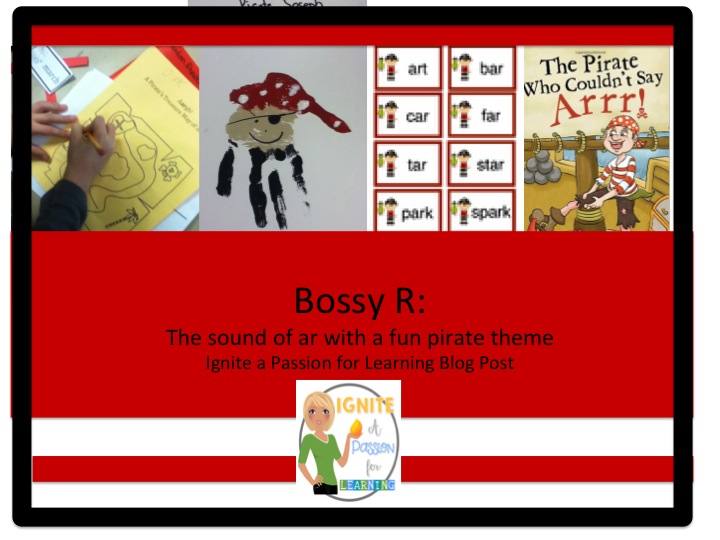
This week we started bossy r.  We began with ar and used a pirate them.  (Pirates say aargh!)  There are so many good pirate books and the hardest part is choosing which anchor activities to do!


I actually reserved a bunch of pirate books from my library, stopped by on my way to work to grab them from the anytime locker, but my code didn't work!  I totally panicked for a few minutes, but was able to get a couple from our school library and a 3rd grade teacher.  Whew!  That will teach me to make the time to get to the library on Saturday next time:)

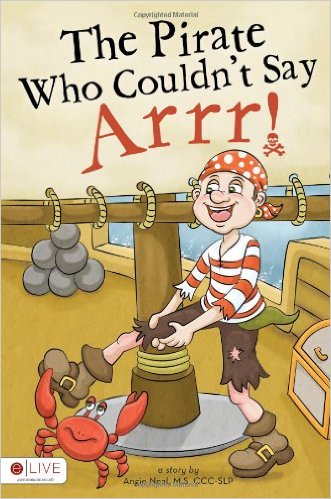
So, this is the perfect book to introduce ar with if you are using the pirate theme.  It gets the kids saying the ar sound right away due to the interactive nature of the story.  (Because I clearly was a disorganized mess in terms of gathering my materials this week, I left my copy of this at home and didn't get to start with it.  But I'm sure you are much more on top of things:)


I started with How I Became a Pirate and it grabbed their attention as well.  (We just had to add our own ar sounds:)


I also used the ever-popular Magic Tree House books.  I told them that I would read aloud from both the fiction and nonfiction books for the next several days.  My own son (2nd grader) is completely obsessed with the Magic Tree Fact Trackers.  He can't get enough so it has inspired me to read them aloud to my class whenever I get the opportunity.  


A to Z reading has 3 levels of Blackbeard the Pirate.  There are so many things you could do using the 3 levels of the same book, but I needed to keep it simple this week.  I chose the level K to use in my whole class reading block.  We made predictions and asked questions before reading.  (Students had their own paper copy of the book).  We summarized and clarified during reading (and continued to make predictions and ask questions).  Most of them don't have much background knowledge on Blackbeard so it is so exciting to introduce them to some pirate facts.


I prepared a little treasure hunt for my firsties.  I simply stapled cards with ar words written on them to two pieces of red construction paper to look like an x.  I put them around the school.  Each student took a turn leading the line and finding an ar card.


We all quietly whispered the ar sound with our best pirate motions and faces.  It was quite adorable.  The words led us to the office where I surprised them with a small treasure chest full of chocolate (which I borrowed from another first grade teacher) and stickers (which I found in our desk).  We then went back to our classroom and the students wrote all of the ar words on their own treasure map.


And finally, we made pirate handprints.  Next week, we will do some word dictation and they will fill these up with ar words.  (It makes the assessment just a little more fun:)


My job share partner continued with or the second half of the week using a popcorn theme.  Next week, I will use a car them to teach the sound of er, ir, & ur.  My bossy r resource is available here in my TPT store.  It has word cards for all of the bossy r sounds and a simple template for students to create their own anchor charts.

It was a FUN week and they definitely have the hang of the ar sound for sure.  And luckily for me, they didn't have a clue that I was throwing some things together at the last minute!  I must say, last year I had much more elaborate plans and materials.  I had treasure boxes that I got from amazon for each student, pirate eye patches, pirate coins (Rollos) attached to each word card for the treasure hunt, and they made their own pirate hats for the hunt as well.  But honestly, there was the same level of enthusiasm with my more "last minute, beg, borrow, and steal" plans for this year.  So if you are short on time, clearly it's not too hard to put together a memorable anchor experience to introduce the sound of ar.  Have fun!  Aargh!!!

Sunday, February 28, 2016

Brag Tags: Not Just Another Reward

This is my first year using Brag Tags and I love them.  My students love them.   And I feel like it is making a positive difference in my classroom.


The basic concept behind Brag Tags isn't something new.  I remember making my own "Caught Being Good" tickets when I was student teaching 15 plus years ago.   A couple of years later, I made "Coventry Compliment" tickets for our whole school to use to recognize positive behavior.  I think many teachers have been using a version of these for years.  Why?  Because it works!  The way I use my Brag Tags is definitely more intentional and thoughtful than when I used other tickets in the past.  And I think the way I implement them into my classroom is deeper and more meaningful than just another reward for a student that is doing what is expected.  That's really not where they have their power at all.

I have never been comfortable with rewarding kids for doing what is expected.  Just like at my own home, I expect certain things from my kids without me having to reward them or give them allowance.  They are expected to help clean up, set the table, or help watch their baby brother for a few minutes while I finish cooking dinner or help someone with their homework.  I don't reward them  for that.  It's just expected that when I ask for their help, they do because they are part of the family.

And I think the same is mostly true in the classroom.  Students should follow the routines and expectations and not need a reward.  (I definitely have an exception to this though.  Students that need individual behavior plans I think do sometimes need to be rewarded for meeting the classroom expectations.  You can read more about how I work with more challenging students in my previous post Rethinking How to Handle Our Toughest Students here.)

I see the pendulum swinging the other way in sports as well.  Where it used to be everybody gets a trophy just for participating, things are shifting to kids earning trophies.  The non-winning competitors are left to deal with the disappointment of not winning.  As hard as this can be to watch as a parent, I think it is good for kids to experience disappointment.   It gives us the opportunity to support our children as they learn how to deal with disappointment, failure, and sadness.  If we shelter them completely from negative emotions, then they won't develop the skills when they are faced with the difficulties life brings as adults.  We can guide them and teach them to navigate through the tough times so eventually they have skills to do this by themselves.

In fact I just had this experience two weeks ago when my son lost the championship basketball game for the rec league he was playing in.  We even had to drive home one of his friends from the winning team-trophy and all.  There was part of me that ached too when I saw his sadness.  But there was a part of me that knew this was a chance to strengthen his character.  I supported him as he learned how to lose with grace and deal with his disappointment.  It wasn't easy, but those growing moments often aren't easy.  As we talked after dropping his friend off, I was more proud of him than if he had won that trophy.

I say all this because I've realized that some may view something like Brag Tags as just another way we are creating a sense of entitlement in kids these days by over-rewarding them.   And I couldn't disagree more.

Brag Tags to me are not a reward.  They are a way for me to recognize the positive in my students.  When I'm pointing out the good things going on my classroom (rather than focusing on the negative and what not to do), the environment becomes more positive.  It focuses my attention and the attention of all my students on the positive.  This is important to me because I strive to create an environment where each of one of my students feels safe and valued.


Once they earn a Brag Tag, it is theirs to keep.  Mistakes that they make later don't take away from their earlier successes.  This is one of the issues I have with the clip up charts that are so popular.  (You can read my post here for more details about why I don't use those charts.)

Brag Tags are, most importantly,  a teaching opportunity.  When I hand out a Brag Tag, I have an opportunity to teach all of my students.  I can decide to spend 5 seconds and just state a simple sentence or I can spend 15 minutes in a class discussion.  In this way I am supporting students as they learn and develop positive character traits.  We can't just expect students to meet our expectations because we told them during the first week of school.  We have to model.  We have to discuss.  We have to praise them as they are strengthening their "character muscles."  (And some students are going to need more support than others.)


One of the character traits that our district focuses on is integrity.  So, I made a brag tag for it.  This was a word that none of my little firsties were familiar with.  Reading a story and discussing the meaning of the word is a good start, but for most of my students, it takes much more than that.  If I want my students to truly understand and then work to have integrity, it needs to be integrated into our day.  By recognizing when my students are demonstrating integrity and pointing it out to my entire class, I'm helping support the work of building integrity in each of them.

I love using Brag Tags because there is so much flexibility in how they are used.  I'm committing to encouraging and giving positive recognition without a the commitment of a complicated system.  It becomes just a natural part of our day.  One of the best effects of this is that the students begin to recognize each other's accomplishments and show that they genuinely care about one another.   A positive learning environment...Celebrating character growth and academic progress...Sincere interest in others' success?  What more could a teacher ask for?


Tuesday, February 16, 2016

Rethinking How to Handle Our Toughest Students

It's true.  I really do have endless patience for my toughest students.  (I wish I could say I had that same patience at home with my own 4 children-but I'm working on it!)  It doesn't mean that I always have the answers or do the right thing in every situation, but I do have patience and am always able to calmly treat my students with kindness and respect even when their behavior is the complete opposite.  How is this possible?  It's because of my perspective on why they are misbehaving in the first place.


Just this week, I have been spending hours trying to problem solve how to handle a challenging student in my classroom.  He is extremely disruptive and impulsive.  I feel like I can't get in a sentence without him blurting something out.  It seems nearly impossible for him to stay in his seat to get any work done (despite preferred seating, positive incentives, extra support).  Yesterday, all I could give was give a blank stare at the end of the day when I looked over and saw him getting hand saniziter for (what seemed like) the 15th time and it was pouring like water from his hands-literally dripping on the floor.   A moment later I had turned the lights back on (after having them off to signal to my students to listen to bus announcements) and I watched him go over and shut them off.  This was after a day where I was collecting baseline data for a new behavior plan I'm going to implement and I had a fresh tally of the number of times he shouted out during lessons.  I was very tuned in to his challenging behavior on purpose.  Earlier in the year, when my job-share partner and I communicated to his mom about his behavior, her response was "No duh!"  Every substitute writes down his name as being a problem.  If a specials teacher is going to give me the name of someone who was "off," it will be his.  I think it's safe to say, that he exhibits this behavior at home and at school.

So it would be VERY easy for me to see this student as unmotivated or maybe even attention seeking.  It would be very easy to think he simply wasn't trying hard enough or lacked the respect he should have.  It would be very easy for me to blame the parenting.  It would be very easy for me to give him consequences and take away privileges.  But I don't.  (Well, to be honest, I almost took away some privileges because I was feeling like nothing I was doing was working.  But my very knowledagble husband who happens to also be in the profession gave me some much better advice and helped me regain my focus.  Hey, we all have our off days:) I didn't lose my patience yesterday despite the day he had.  I know that he wouldn't do those things if he knew what to do differently.  I know that taking away recess, calling home, moving his clip down, sending him to the office, and taking away privileges isn't going to change his behavior.  Instead, I believe it is an opportunity for me to teach him strategies and skills to do something differently.  I believe it is my responsibility to create an environment and behavior plan that will allow him to experience success.

So after collaborating with my husband (okay, him giving me expert advice and me taking notes), I came up with a new plan.  I can't tackle everything, so I am focusing our plan on the need for him to raise his hand and not constantly blurt out his every thought.   I'm pretty familiar with setting up individual behavior plans and certainly have done my fair share of those.  However, my husband reminded me of the need for a couple of components that were missing from my plan.

 The first being- baseline data.  To be honest, baseline data for behavior is something I have done to satisfy the IAT process, but have rarely felt the need to do it beyond that.  So I made a simple tally chart, kept a tally for the number of interruptions per hour throughout the day and also jotted some notes about other behaviors I noticed.  It was so helpful!  I'm using that data now to make realistic and attainable goals for his self-monitoring chart.

The other simple aspect that I sometimes overlook is to make sure I have a visual reminder of the goal.  So I just typed up something quick on Word with a picture of a boy raising his hand and will keep that on his desk.

And, the most valuable piece of advice was to make sure I give him a strategy or replacement behavior.  So after looking at my baseline data and information, I noticed that this student is mostly shouting out whenever I'm giving directions or teaching.  Most of the time it is relevant to what we are talking about.  My husband suggested that I give him a small notebook that he could write or draw what he wanted to say rather than shout it out.  Then I would set up a time (or a few) where he could sit with me and share what he wrote/drew in his notebook.  BRILLIANT!  At first, I was skeptical actually.  We discussed since he is so many ADHD characteristics, that then he would be playing with the notebook or not paying attention to what I was saying and just drawing in the notebook.  My husband encouraged me to just try it.  So we started the notebook and it is working!!  It is giving him something to do with that energy and that need to shout out.   I can't believe how much less he is interrupting and I'm not even doing the self-monitoring/incentive chart yet.  What a great reminder and lesson for me that we need to give our students strategies to replace the "negative" behavior.  We can't just expect them to be able to figure it out because we give them a sticker chart.  We need to support them and help bridge that gap for them.

I had such a powerful moment today when he couldn't wait to hold up his notebook and show me the first thing he had written down instead of shouting out.  We were starting an activity in the teacher intervention portion of our math rotations.  He wrote "I like this."  My heart melted.  So sweet.  I gave him a thumbs up and was beaming inside.

I'm not sure I will be completely successful in the time that I have with him.  But that isn't going to stop me from trying.  I know he doesn't want to hear an annoyed tone in his teachers' voices.  I know that he doesn't want to get in trouble.  He is a good kid.  He is a good kid that is lacking the skills to do something different.  And I'm hoping I can make a difference for him.

This year I also have had some success working with another challenging student new to our district. This student came to our classroom and after working with him for a few weeks, I was convinced that he actually didn't go to kindergarten.  It took a bit to get his records, but they did confirm he actually did complete his kindergarten year.  I was convinced of this though because he consistently went from 0 on pretests to 90-100%.  It baffled me how easily he learned, but how far behind he was.  He clearly had some behavior challenges as well.   During fall conferences, I learned that although he did go to kindergarten he spent so much time out of class (in the office typically) because his behavior was so extreme he could not remain in the classroom.  We of course had him on a behavior plan pretty quickly.  The focus has been on positive reinforcement and earning extra privileges.  It would have been very easy to kick him out of class, take away every privealge and give consequences.  His behavior in the past certainly had been outrageous and he for sure was testing the waters in our classroom.  But I believe because we implemented a positive approach, he is doing SO WELL.  Not that we never have challenging moments, but he is on a completely different path than he was a year ago.

Why I Have the Patience for Challenging Students


The number one thing that gives me this patience is a core belief I have: Kids do well if they can.  Kids that are exhibiting challenging behaviors are doing so because they lack the skills to do otherwise.  The way I can help is by teaching them the skills, not punishing them.


This is something that I believe whole heartily and learned from the work of Dr. Ross Greene.  Dr. Greene is the author of Lost at School and The Explosive Child.  He is the originator of a Collaborative & Proactive Solutions.  His work has changed the way I handle discipline in my classroom and shaped my perspective about why certain students can be so challenging.  This mindset gives me my endless patience.  I am anxiously awaiting his new book which will be released this May.  (And no, I am no way affliated with Dr. Greene.  He has no idea who I am.  I just sincerely have been inspired by his work).  You can visit his website www.livesinthebalance.org for many free resources and information about his approach.  There is a "walking tour" for educators and it clearly overview his approach and even has videos.  You can find that here.


I'm not claiming to be an expert in Dr. Green's approach.  I was just thinking I would benefit from rereading Lost at School and watching some of the videos.  But his principles are certainly what guide my decisions and my interactions with my students.

I started my teaching career in an inner ring suburb and the skills I learned by working with some extremely challenging students and classes there I know have strengthened my ability to work with more challenging students in the suburban district I work in now.  Even as a beginning teacher, I had patience for these types of students.  I was very aware of the backgrounds and home life of many of my students and I knew that often their behavior was a result of things that were beyond their control.  I had compassion.  I figured out that talking through issues with students and developing strong relationships with them was far more effective than dishing out consequences.  Regardless of a student's home life, it can be easy as a teacher (and a parent actually) to view "misbehavior" as attention seeking, disrespectful, manipulative, or a result of entitlement and/or lack of motivation.  I can't say that I've never had these thoughts myself.

My teacher training taught me to have a behavior management system with clear rules, consequences, and rewards.  Every year I've taught, I am required to turn this system to my principal.  I've always had expectations/rules, consequences, and rewards.   For most students, a consistent and structured behavior management system will work.  I certainly believe that consequences are a necessary part of life and the classroom and certainly don't feel I "coddle" my students.  I tend to prefer a system that gives logical consequences like the Love & Logic program.  For me it makes sense to give consequences based on the situation and the individual student and not have an general set of consequences (although because of school expectations, that's usually what I have).

 And although I've had several different reward systems, I've also always felt that doing too much with rewards isn't something I'm comfortable with.  I don't like to feel obligated to give class money or tokens for every student when they are doing what is expected.  I do like to acknowledge and focus on the positive behavior.  I am using brag tags in my classroom this year as a positive way to acknowledge behavior and academic accomplishments.  I just recently implemented a chart where students put their clip on a character trait they demonstrated.  At the end of the day, I hand out the corresponding brag tags.  This works for me for several reasons.  I am focusing on the positive.  You remember the first time you saw a teacher with some off task students masterfully get everyone right back on task by saying "I like the way so and so is______?"  Teachers have been doing this forever.  This is so much more effective than moving a clip down.  Another reason this works for me is that there is no heichary to the character traits so there is no competion or embarrassment for the students about where their clip is (see my post here about why I don't use clip up behavior charts).  I'm not dangling candy or trinkets in front on them.  They simply get acknowledgment and a tag to keep and share with their families.  And most importantly, when I move their clip to the character trait chart or hand out a brag tag, I have the opportunity to teach the students.  I can spend a few seconds or sometimes a much longer time for class discussion to focus on the trait and the positive behavior.  In this way, I'm constantly teaching my students strategies for good behavior.  They are seeing and discussing ways to handle difficult situations which has a positive snowball effect in the classroom.

 But, what I didn't know as a very young teacher was that no matter which system of consequences and rewards I implemented, it wouldn't work for every student.  There are some students that will require a whole different system or approach.  I learned and now truly believe that fair doesn't mean equal.  I think as teachers, we have accepted that some students require more to succeed academically.  We know we need to provide interventions and change what we do for them to experience success.  The same is true for behavior challenges.  One approach isn't going to work for all.  Some students are going to require much more of our time. We need to give each student what they need and that isn't going to be the same for all of our students.

Dr. Greene's research and work has given clarification, structure, and validity to what I've always felt intuitively, but was never able to effectively transfer to my classroom management.   I realize this is a great contrast from what many teachers do and what we are expected to do.  And if in your classroom, that is working for you and all of your students, then this approach may not be something you need to consider. But for those of you who have a student or a classroom full of students who nothing seems to be working for, I'd encourage you to consider that perhaps this students would do well if he/she could.  Perhaps you can teach them skills and strategies to do something different.

The next time you have a student scribble all over their work, refuse to do an assignment or follow a directive, or flip over a desk in a fit of anger-I'd encourage you to just try a different approach.  Shift your mindset.  Think to yourself, that if this student had the skills to do something different, they would.  Sometimes, yes, it means swallowing your pride and that desire to give a consequence to let the student (or the others watching) know they didn't just get away with something.  And yes, it for sure takes far more time and effort.  But that student needs and deserves your time and energy.

I have found that this mindset gives me so much more patience, that my classroom environment is much more positive and nurturing, and most importantly those tough students stand a chance at changing their behavior and experiencing school as a positive place to be and learn.

Just like sometimes our students lack the skills and knowledge to do something different, I think teachers can only do the best with what they have been trained to do and the skills they have.  It is my hope, that something in this post encourages you to expand your knowledge to other options in dealing with our toughest students.


Monday, February 15, 2016

ea vowel team

Beach Day!

It finally feels like winter around here and the kiddos and I thought it was so fun to have a beach day when the snow was falling like crazy.  Like I've mentioned in other posts, I like to do a memorable anchor experience when introducing a new phonics sound.  Some are more fun than others and this simple beach day is one of my favorites.


 I brought in some small beach balls with ea words written on them.  I put students in groups and they took turns tossing the beach ball and reading the word their thumbs landed on.  Each ball had different words so then we would rotate the balls.  They were working hard to sound out those ea words.  Needless to say they thought it was amazing to be tossing around a beach ball in class.


We brainstormed our own list of ea words and then spent time on a ea word hunt using our classroom library books.  I had them write down the words they found to create our ea anchor chart.


In small reading groups I did various activities depending on the needs of the group.  The a to z reading site has two books that focus on long e words.  I choose The Bee and the Flea for one of my higher groups.  We applied our reading comprehension strategies of making predictions, asking questions, summarizing, and clarifying.  Students highlighted ea words as well.


To provide a pretty significant challenge for my highest group, I gave them a book with tons of long e words and a chart.  With my support, they discovered the many ways e can make the long vowel sound.  This was a great activity and I was surprised at how much effort they had to put forth to find them all.  In fact, I gave all 4 of these students our "Determined" brag tag because I was impressed with how they did not give up!

For some of my groups, I created these ea word cards.  I flashed these with the group to practice reading ea words as a whole group.  I also had them play "Shark Attack."  They loved this simple game.  They each took turns pulling and reading a word card.  If they read the word correctly, they kept the card.  If not, it was returned to the pile.  When they pulled a shark card, they had to put all of their cards back.  The winner is the one with the most cards at the end.  I will put this activity out during our next round of centers.  I love using activities and materials in my small groups for my centers because I already modeled and played the games with the students so they know exactly what to do.  (See my post here about how I do my literacy centers).


For our whole class reading, I found a great book called Amazing Beaches.  As a whole class we reviewed and I modeled using our four comprehension strategies.  We also reviewed the nonfiction text features and used them to help us make our predictions and ask questions.  The students then had to write a paragraph about which beach they would like to visit and use details from the selection when giving their reasons.


We had fun with the beach theme and the students are still begging to use the beach balls to practice reading their ea words.  How can I resist students asking to read?!  I'll have to hide those beach balls soon:)

Tuesday, February 2, 2016

Writing Choice Menus

I think the smoothest, easiest part of my day is the 90 minutes I do small group reading.  You can read about my original blog post about that here.  One of the aspects I mention in that post is the writing journals I use daily with my students.   I LOVE these writing choice menus!


My students have a timer that helps them monitor themselves as they complete their center routine (while I'm meeting with small reading groups).  One piece of this routine is that they write for (at least) 10 minutes.  The writing menu gives them lots of options and they get to CHOOSE which topic they write about each day.  Whenever students have an appropriate amount of choice, they are motivated.  They also can choose to write about something that's not on the menu, but 99% percent of the time, my students prefer to pick a topic from the menu.  

The choices are numbered so that they can write down the number on their journal page.  This helps both of us when we conference.  (Sometimes that invented spelling in first grade can be hard to decipher:)  Each prompt has a picture to help cue those emergent readers.  The students just cross out the prompt they chose each day.


I've always done journaling with my students and this is by far my favorite way.  They never run out of things to write about and they are very motivated to write each day.  I love the informality of journal writing.  I feel like I get to know my students through what they choose to share in their writing.  Analyzing their journal writing allows me to see what conventions and skills they are secure with and the areas that I need to give more instruction, modeling, and practice with.  These strengths and weaknesses seem to be much more apparent in journal writing than the more formal writing we do with opinion, informative, and narrative pieces.  I typically provide more support and modeling in these pieces than the journal writing.  

If you are interested in using these writing choice menus in your classroom,  you can stop by my TPT store.  They are so adaptable to many literacy routines like the Daily 5 or whatever way you get your little ones writing each day!  I hope you find them a good addition to your classroom!

Friday, January 22, 2016

Differentiated Math

We recently had an opportunity to actually talk and share ideas with all of the other first grade teachers at the end of our half day district inservice the other day-it was amazing!  I may be a bit odd because I have always loved staff meetings, professional development, taking classes toward renewing me license etc.  I love connecting with other people in our profession and learning from each other.  It's what has always made me love this career so much.  I can never know it all.  There is always something new and ways I can improve for the benefit of my students.  To me, that is so inspiring.  What was so great, was that in this group of first grade teachers, there were so many that are looking to learn and share from each other.  We are in the process of organizing our own get togethers where we can collaborate on things that we feel would benefit us.  So exciting!

Anyways, we were sharing how we are approaching the implementation of our new math series (Go Math) and I mentioned my MATH rotations (see a post about them here).  As I have thought about some of the questions I was answering about the routine, I thought it might be helpful if I described a typical math lesson and how I differentiate. (I won't have too many pictures since this wasn't a preplanned post, but I will do another one soon and make sure to include more pictures).


My main message to these awesome ladies was that the materials in our math series are just a resource to me.  I don't allow it to dictate my lessons.  I'm still doing what I have been doing for the past several years because it's been working.  I have had to adapt things a lot as we changed from EDM to Go Math.  Yes, I use the materials, the same format as their assessments, the sequence, etc.  But the core of how I teach math remains the same.

My other main point is that differentiation doesn't need to be fancy!  I have four children of my own and sometimes feel like I'm drowning with all of the things I need to do as mom, wife, and teacher.   I pour my heart and soul into teaching, but I try to be efficient and keep things simple whenever I can.  I have read some other blog posts about guided math and I get exhausted just reading about the color coded bins and seemingly endless differentiated activities.  My MATH rotations provide differentiated instruction, but in a way that is very manageable for me which means I actually can keep up with it:)

I rely on data a lot and truly use it go guide my instruction.  My math groups change daily based on that data.  I love nothing more than getting to meet with each group and feeling like I am giving them instruction right at the level they need.  But in order to consistently meet with my groups and not get overwhelmed, I have learned to keep things simple.  My differentiated instruction certainly isn't full of cute laminated task cards (I try when I can), but I don't put too much pressure on myself that way or I would get too overwhelmed and not keep up.  So here is a peak at how one of my lesson's developed this week.

Identify the Learning Objective

We are on unit 6 in Go Math which focuses on place value.  Wednesday I planned to teach lesson 6.8 which focuses on making a model to show a number in different ways.  The common common core standard is 1. NBT.B.2a (Understand that the two digits of a two-digit number represent amounts of tens and ones.)  Our students also take the MAPS assessment to show growth and I know that there are problems where students need to identify more than one way to represent a number with place value blocks.  So this is an important lesson for sure and I knew some of my students would struggle with this skill.

Create Assessments

Creating assessments is usually my first task.  For Go Math, we give the chapter tests for a summative assessment.  I create my own diagnostic, formative, and summative assessments in addition.  I know many teachers use the review that is provided as their diagnostic.  This isn't as helpful to me because there are so many skills with typically only one question for each skill.  I find it more helpful to make my own assessments with several questions so it gives me a clearer understanding of where each student is with the skill.  Formative assessments may be simple exit slips and I sometimes use a couple of questions even right from their Go Math workbooks.  If the skill is also a common core standard then I like to have a summative assessment on that skill in addition to the chapter test.

For my lesson this week, I knew my job-share partner had created and given a diagnostic assessment and planned to use that data.  However, on the day of the lesson, I decided to also include one more quick  assessment so that their level of understanding was current.  I like to give the pretest the day prior to the lesson whenever possible.  But that's just me being probably a little over the top and doing the pretest a few days before probably wouldn't change things all that much.

Gather Materials

I then get busy gathering materials to use with my groups.  Sometimes that means I create something new, dust off something from a previous year, or search on TPT.  For this lesson, I remembered that I created a whole mini place value unit that included some task cards.  YAY! One less thing to create for me!!!  I love these task cards because there are two sets for easy differentiation (yellow or black chevron).  There are several types of questions/tasks with place value so if the "showing two ways to make a number" becomes too simple for a group, I can move on to the value of digits or expanded notation.

Since I'm usually gathering materials prior to knowing exactly where my students fall, it isn't an exact science.  However, I know that I will need to have something for all of the levels.  I make sure to have materials for the group(s) that demonstrate mastery on the pretest.  Often this means just taking a look at the second grade skills or sometimes it is just doing something more challenging with the first grade standard.  

Give the Diagnostic & Create 4 Groups

I graded their papers and sorted them into 4 groups.  Since I have less than 24 students, I always just make sure that there are never more than 6 students in a group.  If you have a larger class (I have done this with larger classes) and you just have to adjust to 7 in a group.  I tend to make my lowest group as small as possible to provide as much individual support as possible.  When I'm sorting my students into 4 groups, there are always surprises.  There were two students that normally struggle, but answered the diagnostic question perfectly.  This is why I do assessments for each lesson.  I'm not using a general performance score to group my students.  It is specific to that skill.  Sometimes I have a typically high performing student that needs more help on a certain skill.  My assessments are the way I ensure that each student is getting the instruction they need.

For this lesson I had 4 students in the very top group, 6 in the middle groups, and only 3 in my group needing some intense intervention.

Whole Class Introduction

I usually spend a few minutes as a whole group introducing the skill we are working with for the day. I tell them our focus and write the learning goal on the board.  I like to model and sometimes have students do some guided practice on their dry-erase boards.  

For this lesson, I used the Go Math online component projected on the smartboard to model this process.  Then we did 3 problems on the smartboard/dry-erase boards before moving to the rotations.

MATH Rotations

So what are the other students doing while I meet with students?

m=math facts (addition flashcards-differentiated).  Students can choose to work alone or with a partner

a=at your seats 
For today's lesson, I kept it extremely simple and assigned a  Go Math workbook page.  On this page students were given numbers and had to come up with 2 ways to show the place value blocks. To differentiate (simply!) I provided place value blocks for some students.  I have a student that I modify nearly every assignment.  For him, I wrote only 3 numbers and had him use blocks and then draw the model to represent the number one way.  He needs a lot more instruction before he is ready to show the number two ways.  

t=teacher time 

h=hands-on 
Students work on iPod Touches.  We just got a class set of Chromebooks so I'm hoping that sometimes during this station, students will log in and be able to work on skills that are more directly related to the unit we are.  

TEACHER  TIME DETAILS
I started with my highest group.  I gave them each two task cards like the ones show below.


I then introduced to them the place value block for hundreds.  I modeled this and then gave them some task cards (below) to practice.


Once the four of them seemed secure with this, I modeled how to generate two ways to draw the place value blocks and had them practice using task cards (below) to practice.


This group was doing so well and moved through these pretty quickly, so I decided to extend it just a bit more and talk about the value of each digit in a number.  I taught and modeled this concept using a task card and then gave them the last couple of minutes of our meeting time to practice this skill.  We even did a few (not on task cards) that were in the thousands.


My middle two groups were all students who on the diagnostic could give me one way to model the number, but needed more work with coming up with a second way.  During our meeting time, I explicitly taught them how to model a second way.  It was the whole "I do, we do, you do" model.  I modeled it.  Then we did a few together (I wrote on my easel while, they wrote on the dry-erase circles at the table).  And then they did some task cards on their own.  This individual practice is so helpful because I am right there to provide immediate feedback.  As they are working at their own pace, I can provide more instruction and support as needed.  These groups only worked on tens and ones and did not get the enrichment of moving to the hundreds as they highest group did.  I also take notes during the last few minutes of our meeting time about what students would benefit from some additional practice during our IE time.


The students in my lowest group showed (on the diagnostic) that they are not completely secure in showing just one way to represent the number with place value blocks.  In this group, I spent some time with them just writing two-digit numbers and identifying the ones and the tens.  We used manipulatives to represent the ones and the tens and then we moved to drawing them on the cards.  The cards I used with this group looked like the one below.


Two of the students were doing well enough with this that I was then able to work with them on how to represent the number a second way.  I worked with this group a little longer than my other groups.  I made notes to continue to work with them during IE time.

Formative Assessment

So after I met with all four math groups, I gave a quick exit slip.  After working with every student at my table, I already feel like I have a very strong understanding with where they each are in terms of the skill, but I still sometimes like to do a formal exit slip.


I took the data from the exit slips and my notes from meeting in groups and created an intervention list.  In this case there were 3 students who still needed some strong interventions and 3 students that I would need to check in with and provide some "light" interventions with.  Sometimes after meeting with all of my groups, there are more than a handful of students needing more practice.  In this case, I often will do another day of MATH rotations the following day.

So that's it.  Certainly not anything extraordinary.  But the students made great progress in this one lesson and were very engaged.  The high group oohed when I introduced the hundreds block and when I let them work on numbers in the thousands.  (I'm not joking.  That's why I love them.  Easy. To. Please.)  And on the opposite end, I was able to slow the pace way down for those in that lowest group.  They also were very engaged because I wasn't teaching beyond where they were.  I met with EVERY student in a small group.  The learning needs of the students were identified by using the assessment data.  The lesson (materials, pacing, level of support) was differentiated.  So although I mentioned I wouldn't label this lesson as extraordinary, it was a solid, typical lesson in my classroom and I feel extraordinary whenever I teach math in small groups:)  I hope the details I shared help you in some small way as you plan for your small math groups.


Saturday, January 16, 2016

Penguins!!!

This stretch of year can be the hardest.  All the excitement of the holidays are over and winter is really setting in.  So I'm trying to keep their interest (and mine!) and enthusiasm going and what better way than cute little penguins?!


There are so many penguin themed resources out there and my students were so into it that I actually carried this theme for the first two weeks back after break.  Why stop a good thing?

We started by reviewing the strategies that good readers use (what we have been learning in December) and despite two weeks off, I'm happy to report they easily remembered: ask questions, make predictions, and summarize.  Whew!  It actually stuck with them:)

We first made a list of all the things we think we know about penguins.  We talked about how this helps activate our schema.  We also made a list of questions we have about penguins.  I then partnered them up and had them choose a penguin book (my county library had tons).  I gave the students a graphic organizer for them to record summary sentences as they read.  As I walked around the room as they were working I made a note of places where students were struggling to understand a vocabulary word or the meaning of a particular section.  Later, I used these examples to introduce the 4th reciprocal teaching strategy: clarify.

We read a lot about penguins.  A lot.  They were so motivated.  I did read alouds, shared reading, partner reading, and guided reading.  During and after reading, we recorded important and interesting facts about penguins.  This is when I get so excited about teaching reading.  I love when they are authentically motivated and engaged in reading.

Are penguins a part of my curriculum?  Totally not.  But I love to use a theme like this and teach reading strategies (like ask questions, make predictions, summarize, and clarify).  I modeled these strategies and the students also had lots of opportunities to utilize them in their reading with varying levels of support.  Exploring all of these penguin books was also a great opportunity for them to utilize their knowledge of nonfiction text features.

The students wrote an informative piece using the facts and we did a fun directed drawing to display with their writing.  We do informative writing pieces quite often and they do so well with these now (but clearly we didn't edit and revise these:).


We also revisited the cubing strategy (see my Grinch post here for more details on cubing).   We used the information we learned from all of our nonfiction reading about penguins and did some higher level thinking.  I have been terrible about remembering to take pictures lately, but here is a page from the cubing activity.


Our district hired a consultant to model some research based strategies for teachers.  She did a lesson with our class so that the K-1 teachers could observe.  I felt a little bit of "affirmation" because part of her lesson involved the students arguing for or against penguins making good pets.  Kinda neat that of all the strategies and activities she ended up modeling one that I had just done.  Every so often I feel like I kinda know what I'm doing:)


You can click here to get a FREE copy of the penguin cubing sheets, graphic organizer, and writing paper that I used for the informative writing.

Next up, more cold weather connections-polar bears!